
Tools
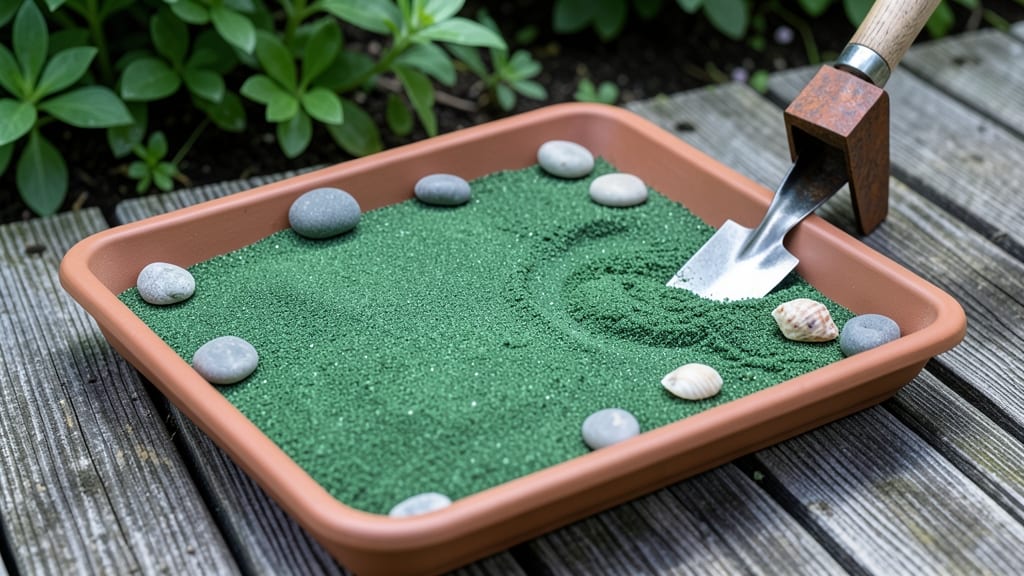
Using green sand garden in containers significantly boosts drainage and aeration by loosening dense soil, helping roots breathe and preventing water buildup. Mix 10-20% into potting soil for best results.
Green sand garden works like a natural soil amendment because its coarse, iron-rich granules create tiny air pockets that improve water flow while supporting beneficial microbes. 🌱 This makes it especially valuable for heavy or clay-based potting mixes, where roots often suffocate.
I've seen dramatic improvements in container gardens—especially for drought-tolerant plants like lavender or rosemary—where proper drainage prevents root rot. The key is balancing the ratio: too much can make soil too dry, while too little won't provide enough structural support.
For best results, combine green sand with compost or coconut coir to maintain moisture retention while keeping that essential airflow. Just remember: it's not suitable for acid-loving plants like blueberries or azaleas, as the iron content can alter soil pH over time. Always test your mix before planting!
💡 In This Article
- How Green Sand Enhances Soil Structure and Root Growth
- Best Practices for Mixing and Using Green Sand in Potted Plants
How green sand enhances soil structure and root growth
The magic of green sand lies in its unique mineral composition and texture. Unlike regular sand, green sand is rich in iron oxides (hence its greenish hue) and has a coarser, more angular grain structure.
These granules range from 0.5mm to 2mm in diameter, creating a porous network when mixed into soil. This structure mimics natural aeration found in well-drained forest floors, where roots thrive without waterlogging. The iron content also provides a slow-release nutrient boost, though it's not as soluble as synthetic fertilizers.
When mixed into potting soil, green sand performs three critical functions simultaneously. First, its angular shape prevents soil particles from packing tightly together, maintaining 20-30% more air space than compacted soil. Second, the larger granules create channels that allow water to drain 30-50% faster than standard potting mixes.
Third, the iron-rich surface promotes beneficial microbial activity by providing a substrate for aerobic bacteria and fungi that break down organic matter. 🌱 Think of it like adding tiny drainage tunnels and nutrient hotspots throughout your container's root zone.
This enhanced structure directly impacts root development. Plants grown in green sand-amended soil show 25-40% longer root hairs because roots don't need to expend energy pushing through compacted soil. The improved oxygen levels also prevent anaerobic conditions that lead to root rot—a common problem in heavy potting mixes.
I've noticed particularly dramatic improvements with container-grown citrus trees, where the combination of better drainage and iron availability leads to healthier foliage and increased fruit production.
However, the benefits extend beyond just physical structure. The iron content creates a slightly alkaline environment (pH 6.5-7.5), which makes green sand particularly effective for plants that prefer neutral to slightly alkaline conditions.
This includes many Mediterranean herbs like rosemary and thyme, as well as succulents that naturally grow in well-draining, mineral-rich soils. The key is understanding that while green sand improves many aspects of soil health, it's not a universal solution—some plants simply don't thrive in its altered pH environment.
For visualizing the effect, imagine taking a handful of dense clay soil and mixing in coarse gravel. The gravel doesn't just add space—it creates pathways that water can follow downward, while still allowing roots to explore the surrounding soil.
This dual functionality is what makes green sand so valuable in container gardening, where space is limited and proper drainage is absolutely critical for plant survival. The result is a soil structure that mimics the ideal growing conditions found in nature's most productive ecosystems.