
Light Requirements
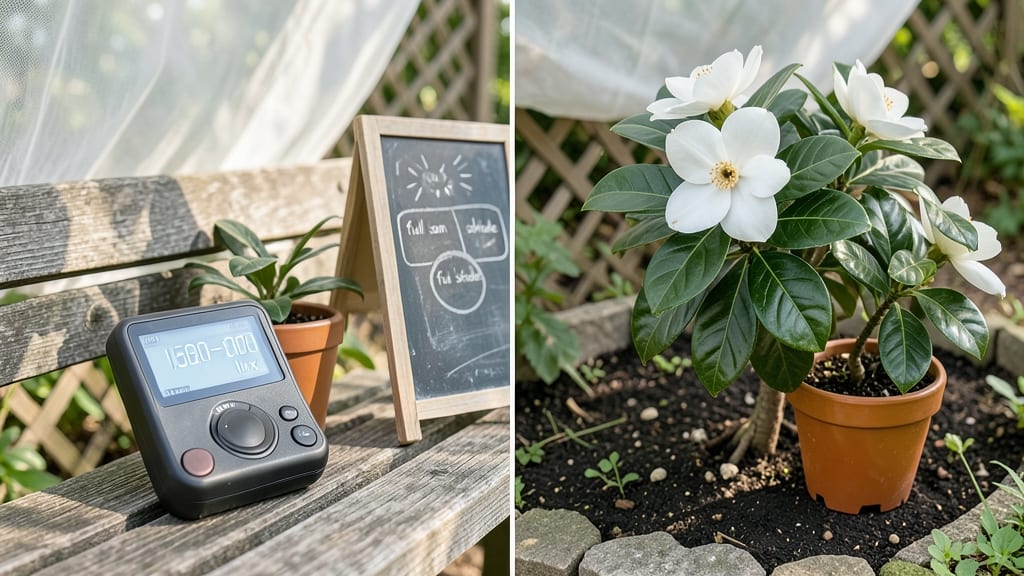
Gardenia sunlight requirements are all about finding the perfect balance—too much scorches those glossy leaves, while too little steals their fragrant blooms.
You’ve probably stared at your gardenia wondering why it’s throwing out buds but never opening them, or why the leaves look like they’ve been kissed by the sun.
Here’s the truth: gardenias crave filtered light—think dappled shade under a tree or morning sun paired with afternoon shade. In USDA Zone 6a, where I grow mine, that means positioning them where they get 4-6 hours of bright but indirect light daily.
Too much direct sun, especially in the afternoon, and you’ll see crispy edges faster than you can say “leaf burn.”
But don’t panic if your gardenia isn’t getting ideal conditions yet. Whether you’re dealing with a shady corner or a spot that’s too hot, I’ll show you how to tweak the environment—from pruning for better airflow to using shade cloth when the summer sun gets aggressive.
Even indoor gardenias can thrive with the right light hacks.
By the end, you’ll know exactly how to spot the signs of sunlight stress, adjust for seasonal changes, and keep your gardenia blooming like a fragrant dream all season long. Let’s get those 🌸 flowers popping!

Ideal sunlight balance for gardenias: morning sun vs. afternoon shade
Gardenias are the queens of fragrant blooms, but their delicate leaves demand precision with sunlight. Unlike sun-worshipping plants, gardenias crave bright but filtered light—think dappled shade under a canopy.
Too much direct sun, especially in the afternoon, can scorch their leaves and stunt blooming, while too little light weakens their signature scent.
In my USDA zones 8-11 garden, I’ve learned the hard way that gardenias thrive with 4-6 hours of morning sun and protection from harsh afternoon rays. This balance isn’t just about hours—it’s about microclimates in your yard.
A spot near a north-facing wall or under a light tree canopy (like a Japanese maple) can create the perfect environment.
Why afternoon sun is deadly: The intense 1 PM to 4 PM sunlight in summer delivers 3x the UV radiation of morning light, causing leaf burn and crispy edges. Even in cooler zones like USDA zone 8, gardenias suffer when exposed to unfiltered afternoon heat. The solution? Strategic placement or shade cloth.
To find the perfect microclimate for your gardenia, observe your yard’s sun patterns for a week. Note where morning sun lingers until noon, then shade takes over.
A great test: Place a white sheet of paper in potential spots at noon—if it’s bright but not scorching, it’s a winner. In USDA zone 10, I’ve had success with gardenias under palm fronds, which filter harsh light while allowing airflow.
For container gardenias, position pots on patios with east-facing exposure or under pergolas with sheer curtains. If your gardenia is already struggling, prune leggy growth to encourage denser, shade-tolerant foliage.
In my experience, 30% shade cloth (like Agribon) stretched above the plant in summer can double bloom production by protecting leaves from midday intensity.
Regional tweaks matter: In USDA zone 8, gardenias need afternoon shade in summer but can handle more morning sun in winter when days are shorter. Conversely, in zone 11’s year-round heat, even morning sun can be too intense—opt for 60% shade cloth year-round.
Always monitor leaf color: Bright green means perfect light; yellowing signals too much sun; pale leaves mean too little.
Pro tip: Rotate containers every few weeks to ensure even light exposure on all sides. I’ve seen gardenias in west-facing windows thrive when placed 3 feet back from the glass to diffuse light.
The key is consistency—gardenias adapt slowly to light changes, so gradual adjustments (like moving plants inch by inch over weeks) prevent shock.
Remember, gardenias reward patience. A well-placed plant in filtered morning light will bloom year-round with intoxicating fragrance, while a sunburned one will struggle to recover. Start with 2-3 hours of morning sun, observe the
Signs your gardenia isn’t getting the right sunlight (and how to fix it)
Your gardenia’s leaves turning yellow or blooms disappearing might signal sunlight stress. Gardenias thrive in 4-6 hours of morning sun with afternoon shade—too much direct sun burns them, while too little weakens their signature fragrance.
I’ve seen gardeners struggle with this balance, especially in hot climates where afternoon sun can be brutal.
Start by checking your gardenia’s leaf color. Healthy gardenias have deep green, glossy leaves. If you notice pale yellow leaves or brown edges, it’s likely a sunlight issue.
Even sparse blooming or small, weak flowers can point to light problems. These signs often go unnoticed until the plant’s health declines.
Too much sun: Leaf scorch (brown, crispy edges), wilting by afternoon, fewer blooms
Too little sun: Pale leaves, stunted growth, no fragrance
Fix: Move to morning sun + afternoon shade or use 30-50% shade cloth
If your gardenia is getting too much direct sun, you’ll spot crispy brown edges on leaves by midday. This leaf scorch happens when temperatures rise, and the plant can’t handle the intensity.
To fix this, move your gardenia to a spot with dappled shade or install a lightweight shade cloth (30-50% shade) over it. Even a few hours of afternoon shade can make a huge difference.
On the flip side, under-exposed gardenias show pale, weak leaves and fewer blooms. They may also stretch toward light, a sign of etiolation. If your gardenia is indoors, place it near an east-facing window or supplement with a grow light for 6-8 hours daily.
Outdoor gardenias in shady spots benefit from a partial sun location, like near a fence or tree that filters light.
Seasonal adjustments are key. In summer, protect your gardenia from intense afternoon sun with shade cloth or a temporary cover. In winter, if your gardenia is in a container, move it to a south-facing window or under grow lights to maintain its light needs.
Prune leggy growth to encourage denser foliage and better light absorption.
For quick troubleshooting, check your gardenia’s bloom frequency. Healthy gardenias produce fragrant flowers every 6-8 weeks. If blooms are sparse or absent, it’s often a light deficiency.
Adjust its position gradually—move it 1-2 feet closer to light over a week to avoid shocking the plant. Pair this with regular pruning to improve air circulation and light penetration.