
Vegetables
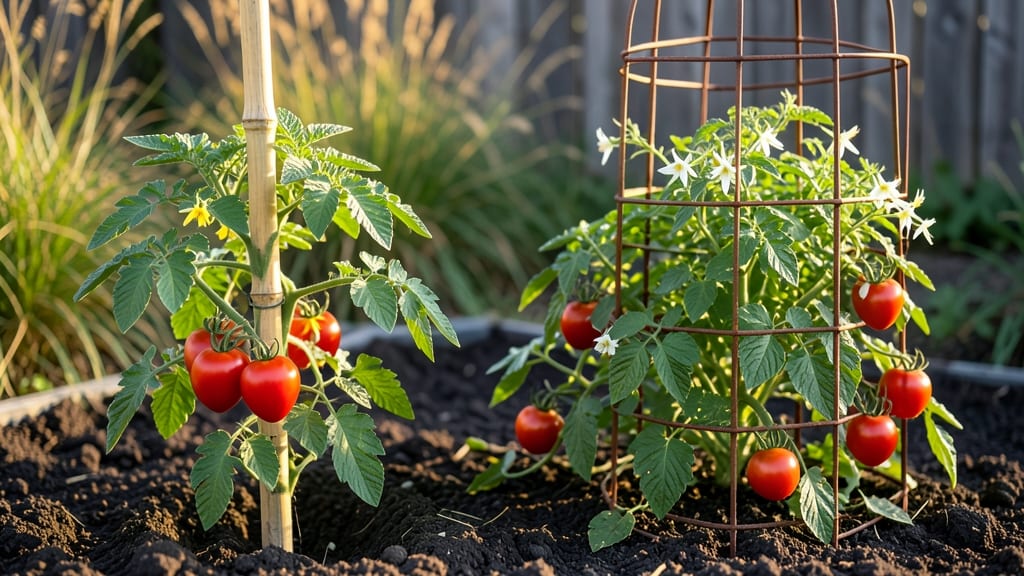
The Gardeners Delight tomato is an indeterminate variety, meaning it grows continuously throughout the season with no set height limit, unlike determinate tomatoes that stop growing and produce fruit all at once. This makes it perfect for gardeners wanting a steady harvest, though it needs proper support.
The Gardeners Delight tomato's indeterminate growth habit means it keeps producing fruit until frost, unlike determinate varieties that yield once and then stop.
This continuous growth pattern makes it ideal for gardeners who want a prolonged harvest, but it does require more space and support structures like cages or stakes. 🌱 The trade-off?
You'll enjoy fresh tomatoes for weeks longer than with determinate types, which finish their production cycle in just a few weeks.
Indeterminate tomatoes also tend to produce more fruit overall, though individual tomatoes may be smaller. This makes them perfect for gardeners who want to stretch their harvest season or preserve tomatoes for later use.
The key to maximizing yield? Proper pruning and support to keep the vines healthy and productive throughout the growing season.
💡 In This Article
- How Indeterminate vs Determinate Tomato Growth Affects Yield
- Best Growing Conditions for Indeterminate Gardeners Delight Tomatoes
How indeterminate vs determinate tomato growth affects yield
The key difference between indeterminate and determinate tomatoes lies in their genetic growth patterns. Indeterminate varieties like Gardeners Delight grow continuously throughout the season, producing new leaves and flowers at each terminal growth point.
This creates a sprawling vine that can reach 6-10 feet tall if unchecked, with fruit appearing along the entire stem. Determinate types, however, have a fixed height (typically 3-5 feet) and set all their fruit at once, producing a single massive harvest before stopping growth entirely.
This growth difference directly impacts yield timing and quantity. Indeterminate tomatoes provide a staggered harvest over 60-90 days or until frost, while determinate varieties concentrate their production into a 2-3 week window.
For example, a single Gardeners Delight plant might yield 20-30 pounds of tomatoes spread across summer, whereas a determinate plant of similar size could produce 15-20 pounds all at once. The trade-off? Indeterminate varieties require more space and support to manage their sprawling growth.
Biologically, indeterminate tomatoes rely on a process called "apical dominance," where the main stem grows upward while lateral branches develop below. When you prune the main stem, you encourage more lateral growth and fruit production.
This is why proper pruning can increase indeterminate yields by 20-30%. Determinate varieties don't benefit from this pruning technique since their growth is genetically limited.
Consider the space efficiency: determinate tomatoes form compact bushes that work well in containers or small gardens, while indeterminate varieties need 3-4 feet of space per plant to thrive.
The vine's sprawling nature also makes it more susceptible to soil-borne diseases if not properly supported, which is why trellising is essential for maximizing both yield and plant health.
Another important factor is disease resistance. Indeterminate varieties often have better overall disease resistance because their continuous growth allows for better air circulation around the plant. However, their prolonged fruiting season means they're exposed to pests and diseases for a longer period.
Proper spacing and support systems help mitigate this risk by improving airflow and reducing humidity around the foliage.
For gardeners planning their layout, this means choosing between quantity over time (indeterminate) or concentrated production (determinate). If you want fresh tomatoes for salads all summer, indeterminate varieties are the clear winner.
But if you prefer canning or preserving a large harvest all at once, determinate types might be more practical.
What most gardeners don't realize is how indeterminate tomatoes' growth pattern affects their flavor profile too. The continuous production means each tomato develops under slightly different environmental conditions, creating subtle variations in sweetness and acidity throughout the season. 🌿