
Tools
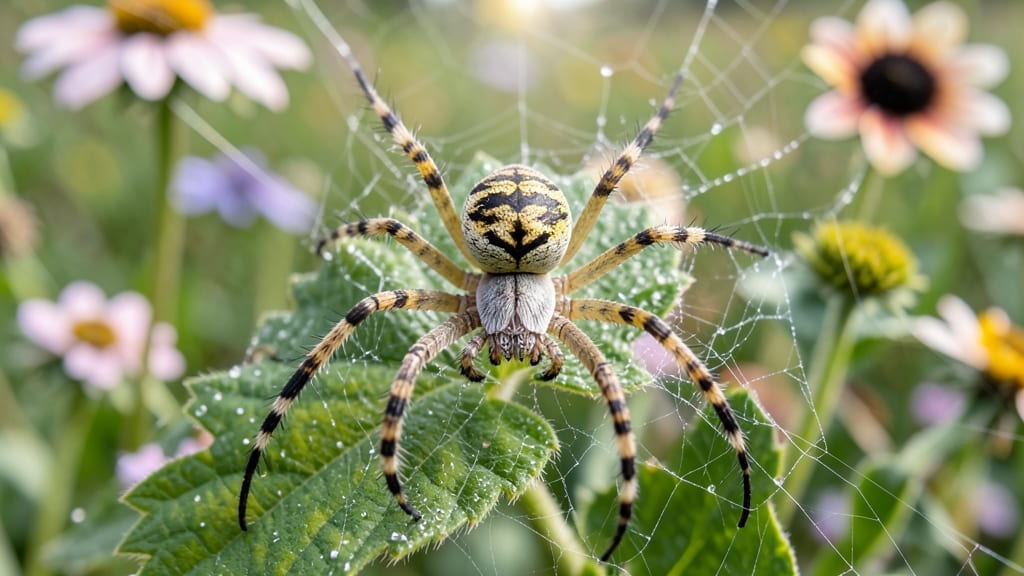
Garden spiders in Oregon are typically harmless orb-weavers with distinctive markings, often yellow and black or gray with white stripes, commonly found in gardens and wooded areas. They help control pests but may be relocated if unwanted.
These eight-legged helpers are actually beneficial allies in your yard, preying on mosquitoes, flies, and other garden pests. 🕷️ The most common species—like the bold yellow-and-black Argiope aurantia—build their signature spiral webs between plants or fences, especially after Oregon’s summer rains.
Their bright colors serve as a warning to predators, not an invitation for trouble. If you prefer fewer visitors, simply relocate them with a cup-and-paper method during cooler morning hours when they’re less active.
What’s fascinating is how their presence indicates a healthy ecosystem.
A thriving garden spider population means your yard has plenty of insects for them to hunt, which naturally keeps pest numbers in check. Neoscona crucifera, another Oregon resident, builds messy, irregular webs that blend into foliage, making them easy to miss until you spot their distinctive banded legs.
The key is balancing their pest-control benefits with your comfort level—most bites are rare and no worse than a bee sting.
💡 In This Article
- Identifying Common Oregon Garden Spider Species
- Safe Garden Spider Removal Methods Without Harm
Identifying common Oregon garden spider species
The most iconic garden spider in Oregon is the Argiope aurantia, also called the yellow garden spider. These striking arachnids boast a 1.5- to 2-inch body with vibrant yellow and black markings, and their legs often display bold white stripes.
Their webs are masterpieces of engineering—perfect orb-shaped designs with stabilimenta (zigzag silk decorations) that may serve as UV signals to birds or even help regulate web temperature. 🕸️ These spiders thrive in Oregon’s summer and fall months, when temperatures average 70-85°F and humidity levels are moderate, making gardens and meadows ideal hunting grounds.
Another common resident is the Neoscona crucifera, easily recognized by its gray or brown body with white stripes and a distinctive pattern resembling a cross on its back. Unlike the precise orb-weavers, this species builds messy, irregular webs that blend seamlessly into foliage, often in shrubs or low trees.
Their webs lack the decorative stabilimenta but are just as effective at trapping prey. In Oregon’s cooler coastal regions, you might spot them year-round, while inland populations become more active during spring and summer when insect populations peak.
The Larinioides sclopetarius, or European garden spider, is less common but still present in urban and suburban areas. This species has a gray body with a distinctive white stripe down its back and builds webs that are slightly asymmetrical compared to the perfect circles of Argiope.
Their webs often appear in corners of buildings or sheds, taking advantage of human structures. These spiders are particularly active during late summer, when they’re preparing for mating and egg-laying, which occurs in fall.
What sets Oregon’s garden spiders apart is their seasonal synchronization with local ecosystems. The Argiope aurantia, for example, time their egg sac production to hatch in spring, just as Oregon’s mosquito and fly populations begin their annual surge.
Their webs can stretch up to 3 feet wide, providing ample space to catch prey while minimizing energy expenditure. This efficiency is why they’re such effective pest controllers—studies show they can consume thousands of insects per year, including garden pests like aphids and beetles.
If you’re trying to identify a garden spider in your yard, start by examining the web structure. Perfect orb-shaped webs with decorative silk are almost certainly Argiope, while messy, tangled webs in foliage likely belong to Neoscona.
Pay attention to the spider’s body markings and leg patterns—these visual cues can help distinguish between species without needing specialized equipment. Most importantly, remember that their presence is a sign of a healthy, balanced ecosystem, not a problem to be eliminated. 🌿