
Companion Plants
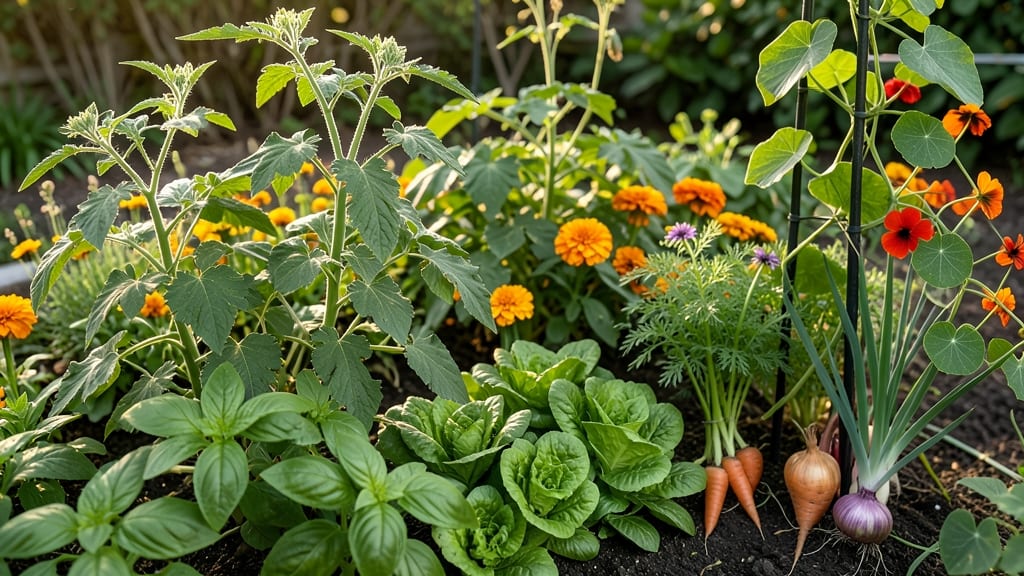
A well-planned companion garden layout can turn your plot into a thriving, low-maintenance ecosystem where plants support each other instead of compete.
Struggling with pests, poor yields, or wasted space in your garden? A strategic companion garden layout can transform your plot into a thriving, self-sustaining ecosystem—while saving you time and money.
This isn’t just about tossing herbs near tomatoes and hoping for the best. The right pairings—like marigolds with cucumbers or basil with peppers—actually repel pests, improve soil, and maximize every square inch of space.
Below, I’ll walk you through 3D spacing tricks (yes, even underground!) to design a layout that works for your garden’s size, sun exposure, and seasonal needs—no green thumb required.
How to design a 3D companion garden layout for maximum pest control
A 3D companion garden layout isn’t just about planting—it’s about creating a dynamic ecosystem where every layer works together. By utilizing vertical space, interplanting, and root depth layers, you can deter pests naturally while maximizing yields.
The key? Strategic placement that mimics nature’s own pest-control strategies, like marigolds repelling nematodes or basil confusing tomato hornworms.
Think of your garden as a multi-level puzzle. Tall plants like sunflowers or pole beans can climb trellises, saving ground space while providing shade for heat-sensitive crops below. Meanwhile, shallow-rooted herbs like thyme or oregano can tuck into gaps, while deep-rooted dandelions (yes, really!) break up compacted soil.
This layered approach isn’t just efficient—it’s a pest-deterring powerhouse.
Here’s the science-backed secret: Companion plants release chemicals or alter microclimates to confuse pests. For example, basil emits compounds that repel flies and mosquitoes, while nasturtiums act as trap crops for aphids. By stacking these relationships vertically, horizontally, and underground, you create a fortress against garden invaders—without chemicals.
🌱
Start with your sunniest spots for tall, sun-loving plants like tomatoes or sunflowers. Place these along the north or east sides of your garden to avoid shading shorter crops. For example, tomatoes (6+ hours of sun) pair perfectly with basil, which thrives in their dappled shade by midday.
This not only saves space but also creates a microclimate that deters pests like whiteflies.
Underground, focus on root depth compatibility. Shallow-rooted herbs like parsley (12" deep) shouldn’t compete with deep-rooted plants like asparagus (3–4 ft). Instead, tuck herbs into gaps between rows of carrots or lettuce, where their roots won’t tangle. This 3D layering ensures no space—or nutrient—goes wasted.
Pro tip: Use living mulches like clover or creeping thyme between rows. These ground covers suppress weeds, retain moisture, and even repel pests like cabbage moths. Plus, they add a textural contrast that makes your garden visually stunning while functioning like a well-oiled machine.
🌿
Don’t forget the underground allies. Plants like comfrey or dandelions (yes, they’re edible!) have deep taproots that break up compacted soil, improving drainage and aeration. Their presence also attracts beneficial insects like predatory wasps, which hunt garden pests like aphids.
By integrating these soil-improving plants, you’re not just fighting pests—you’re building a resilient ecosystem.
For small spaces, think vertically first. A simple 3-tier trellis can support cucumbers at the top, beans in the middle, and lettuce at the base. This stacked layout maximizes your square footage while ensuring each plant gets the light and airflow it needs.
Even in a 4x4-foot raised bed, you can fit a tomato plant, basil, marigolds, and carrots—all working together to keep pests at bay.
🪴
Finally, rotate your companion plant pairings seasonally. In spring, focus on cool-season crops like lettuce with carrots (carrots deter carrot flies). By summer, swap in heat-lovers like peppers with basil (basil deters spider mites). This dynamic approach keeps your garden balanced and pest-resistant year-round, without relying on chemicals.
Top 5 space-saving companion planting combinations for small gardens
Small gardens don’t have to mean small harvests! By using companion planting, you can maximize every square inch while boosting yields and natural pest control. The key is pairing plants with complementary needs—like fast-growing crops with slower ones or deep-rooted plants with shallow-rooted varieties.
These 5 space-saving combinations let you grow more without sacrificing health or beauty.
Permaculture principles like guild planting (grouping plants that support each other) make this even easier. For example, planting nitrogen-fixing beans near heavy feeders like tomatoes creates a self-sustaining cycle. Let’s dive into the best pairings, complete with spacing guidelines and planting timelines to keep competition at bay.
| Combination | Spacing | Sunlight | Harvest Time | Benefits |
|---|---|---|---|---|
| Strawberries + Raspberries | 12" apart (strawberries), 24" apart (raspberries) | Full sun (6+ hrs) | June–October | Strawberries shade raspberry roots; raspberries deter slugs |
| Lettuce + Carrots | 2" apart (lettuce), 3" apart (carrots) | Partial shade (4–6 hrs) | May–September | Lettuce loosens soil for carrots; carrots deter carrot flies |
| Bush Beans + Corn | 6" apart (beans), 12" apart (corn) | Full sun (6+ hrs) | July–September | Beans fix nitrogen for corn; corn provides trellis support |
| Radishes + Cucumbers | 1" apart (radishes), 12" apart (cucumbers) | Full sun (6+ hrs) | April–August | Radishes deter cucumber beetles; cucumbers shade radishes |
| Onions + Tomatoes | 6" apart (onions), 18" apart (tomatoes) | Full sun (6+ hrs) | June–October | Onions repel tomato hornworms; tomatoes provide shade |
Start with the strawberry-raspberry duo if you have vertical space. The strawberries grow along the ground, while raspberries climb a trellis, creating a two-tier harvest. Plant strawberries in early spring, then add raspberry canes 4–6 weeks later once the strawberries are established.
This combo thrives in full sun and keeps weeds down naturally.
For shade-tolerant gardens, lettuce and carrots are a dream team. Lettuce matures quickly (30–50 days), so you can succession plant it every 2 weeks to keep the space filled.
Carrots take longer (60–80 days), so their slow growth won’t compete with the lettuce. Use well-draining soil to prevent forking in carrots, and mulch to retain moisture.
If you’re short on space but want big rewards, try bush beans and corn in a 3:1 ratio. Plant 3 corn stalks in a triangle and surround them with 12 bean plants. The beans will climb the corn naturally, saving you from installing a trellis.
Harvest beans first (50–60 days), then enjoy corn (70–90 days) as the beans continue to fix nitrogen in the soil.
Don’t overlook radishes and cucumbers for early-season harvests. Radishes are ready in as little as 25 days, giving you a quick win while cucumbers establish. Plant radishes in rows between cucumber hills, and watch the radishes deter pests like cucumber beetles.
Just ensure cucumbers have support or space to sprawl—they can grow up to 6 feet long!
Finally, onions and tomatoes are a classic pairing that works in tight spots. Onions repel pests like aphids and spider mites, while tomatoes provide shade to keep onions from bolting in hot weather.
Space them carefully—tomatoes need room to grow, but onions can be planted densely around the base. Rotate crops yearly