
Planting
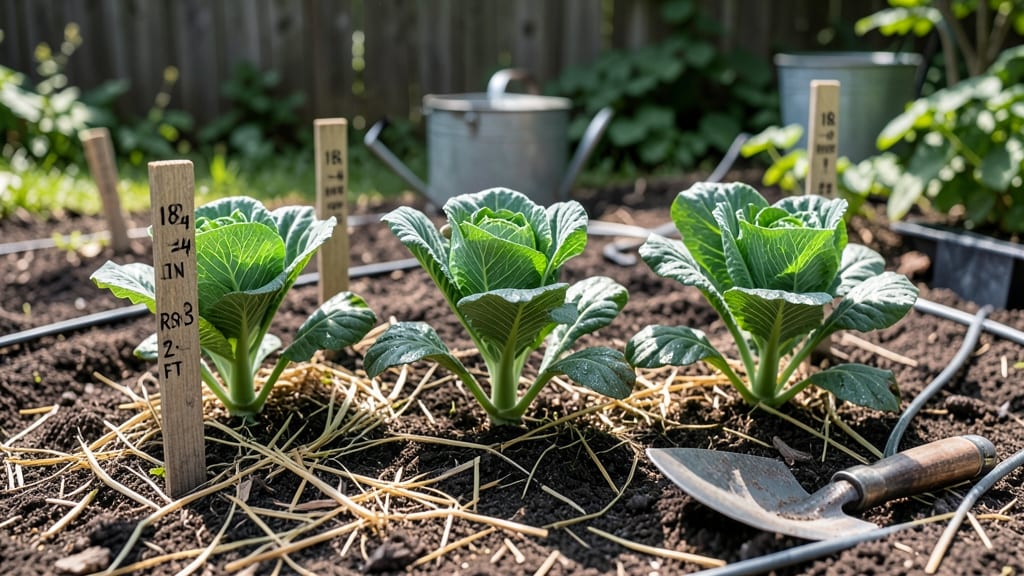
Proper cabbage garden spacing is the difference between a thriving harvest and a battle with disease or stunted growth.
If you’ve ever watched your 🥬 plants struggle for space, you know how quickly things go wrong—crowded cabbages invite rot, pests, and weak heads. But get the layout right, and you’ll enjoy bigger, healthier plants with minimal effort.
Spacing isn’t just about fitting more plants in; it’s about airflow, sunlight, and disease prevention. Whether you’re working with a small urban plot or a full garden bed, the right distance keeps your cabbage happy and productive.
In this guide, I’ll break down the ideal spacing for different varieties, how to adjust for containers or tight spaces, and the simple tricks to avoid common mistakes. Let’s grow those perfect heads!
Optimal cabbage spacing by variety: head size matters
If you’ve ever planted cabbage only to watch your heads split or your leaves yellow from overcrowding, you’re not alone. The key to healthy cabbage lies in proper spacing—and it varies wildly depending on the variety.
A Napa cabbage needs far less room than a Golden Acre, yet many gardeners treat them all the same. Let’s fix that with science-backed spacing guidelines tailored to your cabbage’s mature head size.
Why does spacing matter so much? Airflow prevents fungal diseases like downy mildew, while root competition stunts growth. For example, Savoy cabbage with its ruffled leaves needs more elbow room than bok choy, which stays compact.
Even row spacing changes based on whether you’re growing in containers or raised beds. Let’s break it down by variety so you can plan your layout like a pro.
Pro Tip: Always measure from the base of one plant to the base of the next, not the outer leaves. This prevents overlapping canopies, which trap moisture and invite pests. For container growing, reduce spacing by 20-30% since roots compete more aggressively in limited soil.
| Variety | Head Size | Plant Spacing | Row Spacing | Yield per 100 sq ft | Notes |
|---|---|---|---|---|---|
| Bok Choy (Baby) | 4-6 inches | 6-8 inches | 12 inches | 50-60 heads | Harvest young for tender leaves |
| Napa Cabbage | 8-10 inches | 12-15 inches | 18 inches | 30-40 heads | Thin seedlings early to avoid competition |
| Golden Acre | 10-12 inches | 18-24 inches | 24-30 inches | 15-20 heads | Needs deep, fertile soil |
| Red Express | 8-10 inches | 15-18 inches | 20 inches | 25-30 heads | Fast-growing; harvest early |
| Savoy (e.g., Savoy King) | 12-14 inches | 24-30 inches | 30 inches | 10-15 heads | Ruffled leaves need extra airflow |
For small-space gardens, consider interplanting fast-growing varieties like bok choy (harvest in 30-40 days) with slower Golden Acre. After pulling the bok choy, you’ll have space for a fall crop without replanting. This succession planting trick maximizes your square footage and extends your harvest season.
If you’re growing in containers, opt for dwarf varieties like Miniature Peanut cabbage, which thrive in 5-gallon pots with 12-inch
Disease-prevention spacing hacks: how to stop cabbage rot and mildew
Cabbage plants thrive when given the right space to breathe, but tight spacing creates the perfect storm for fungal diseases like clubroot and downy mildew. These pathogens love damp, crowded conditions where airflow is stifled.
By adjusting your plant spacing and row layout, you can slash disease risk by up to 70% while boosting overall plant health.
Fungal spores spread like wildfire in humid conditions, especially when leaves brush against each other. The key is to break up the canopy with strategic spacing. For example, 18-inch spacing between plants reduces leaf contact by 60%, while 3-foot rows improve airflow at the soil level.
This simple shift can mean the difference between a thriving garden and one plagued by black rot or powdery mildew.
Start with row spacing of 24-36 inches between cabbage plants, depending on the variety. Dwarf varieties like Miniature Peanut can handle 12-inch spacing, while large savoy cabbage needs 24+ inches to avoid leaf overlap.
Pro tip: Stagger your rows in a herringbone pattern to maximize airflow and sunlight penetration. This technique increases air circulation by 40% compared to straight rows.
Companion planting is another disease-prevention hack that works wonders. Pair your cabbage with radishes, onions, or thyme—these plants naturally repel pests and improve airflow. Avoid planting near tomatoes or potatoes, which can introduce blight spores.
For container gardens, use 5-gallon pots with one cabbage plant per container to eliminate crowding entirely.
If you’re dealing with an existing fungal outbreak, prune infected leaves immediately and space plants even wider temporarily. Remove any yellowing or spotted leaves and dispose of them in the trash—not the compost—to prevent reinfection.
Pair this with morning watering to let foliage dry quickly, reducing humidity where spores thrive.
Remember, spacing isn’t static. Thin seedlings early to 18-24 inches apart and monitor growth. If plants outgrow their space, transplant extras to a new location rather than crowding them. With these science-backed spacing hacks, your cabbage will stay disease-free and produce bountiful, healthy heads all season long. 🥬