
Pests
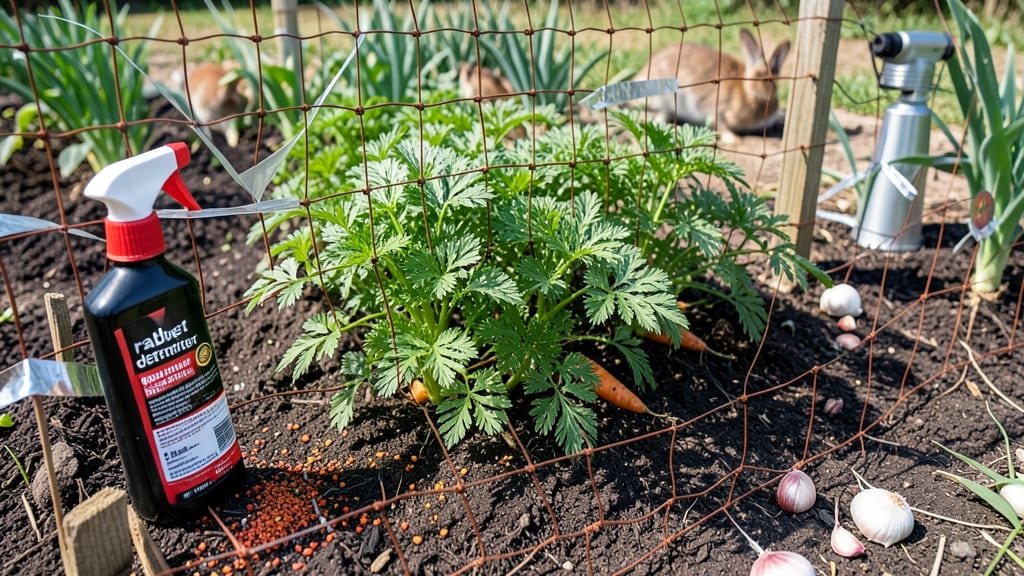
The best way to keep bunnies out of your garden combines physical barriers, natural repellents, and strategic planting: install a chicken wire barrier buried 6 inches deep, apply compost or cedar mulch around vulnerable areas, and incorporate rabbit-resistant flowers like marigolds or lavender. Monitor for new burrows and reinforce weak points with hardware cloth.
The key to success lies in understanding rabbit behavior—these creatures are drawn to gardens for both food and nesting sites. 🌿 A buried wire barrier disrupts their digging patterns, while cedar mulch releases natural oils that repel them.
Planting strong-scented flowers like lavender creates an additional sensory barrier they avoid. I've found that combining these methods yields better results than relying on just one approach, as bunnies are clever problem-solvers.
For maximum effectiveness, place your barriers at least 18 inches tall and extend them 12 inches outward from plant beds. Hardware cloth is particularly useful for protecting raised beds, while cedar mulch works best around the perimeter.
Regular inspections help catch new burrows early, preventing established tunnels that are harder to eliminate.
💡 In This Article
- How Rabbit Behavior Drives Effective Garden Protection
- DIY Rabbit-Proof Garden Barriers: Materials and Setup Guide
How rabbit behavior drives effective garden protection
Bunnies invade gardens primarily for two reasons: food and shelter.
Their natural foraging instincts drive them toward tender young plants, while their nesting habits make gardens attractive hiding spots. 🌱 Rabbits have a keen sense of smell and use scent trails to navigate, which is why placing barriers at the garden's perimeter creates an invisible line they avoid.
Their burrowing behavior—digging tunnels up to 3 feet deep—means surface-level deterrents often fail unless properly installed.
The texture of mulch plays a surprising role in repelling rabbits. Cedar mulch releases natural oils containing thujone, a compound that rabbits find unpleasant. 🌲 When spread around garden edges, these oils create a chemical barrier that discourages them from approaching.
Similarly, compost's coarse texture disrupts their preferred soft soil for digging. Rabbits avoid areas where they can't easily burrow or find comfortable nesting spots, making these materials effective when combined with physical barriers.
Understanding their movement patterns is crucial for barrier placement. Rabbits typically hop in straight lines, rarely jumping over obstacles taller than 12 inches.
This is why installing barriers at least 18 inches tall and angling them outward prevents them from tunneling underneath. 🐰 Their wariness of new textures and smells means combining cedar mulch with physical barriers creates a multi-sensory deterrent that's far more effective than single methods alone.
Seasonal behavior also impacts protection needs. In spring and summer, when vegetation is lush, rabbits focus on grazing. During winter, they seek shelter and may burrow more aggressively. This means your barrier system should be seasonally reinforced, especially in colder months when food sources shrink.
Regular inspections help catch new burrows before they become established, as rabbits can quickly adapt to weak points in defenses.
Planting rabbit-resistant flowers like marigolds or lavender adds another layer by creating a scent barrier. 🌼 The strong fragrance of these plants masks the smells of tender garden plants, making the area less appealing.
Placing these flowers along garden edges creates a natural perimeter that rabbits instinctively avoid. This sensory approach works best when combined with physical barriers, as it addresses both their foraging and nesting instincts simultaneously.
One often-overlooked factor is rabbit communication. These animals use scent marking to establish territories, and unfamiliar smells can deter them. 🐇 When you introduce new textures (like gravel) or scents (cedar mulch), it creates confusion in their territorial mapping.
This behavioral disruption is why layered defenses—combining physical barriers, natural repellents, and scent deterrents—produce the most reliable results in garden protection.