
Pests
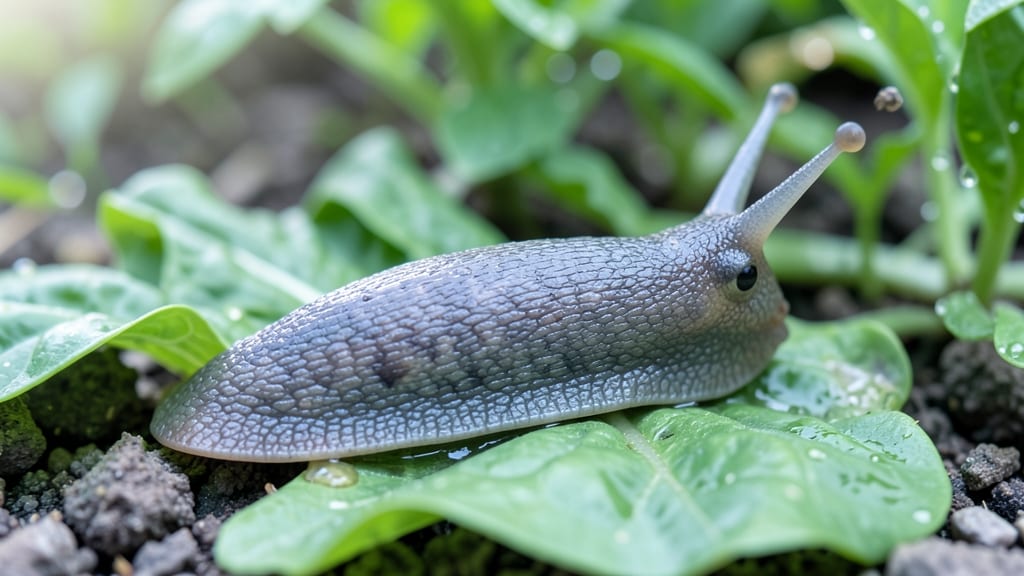
Snails are bad for your garden because they consume tender young plants, chew irregular holes in leaves, and leave behind damaging slime trails. While mature plants rarely die from their feeding, their activity can severely stunt growth and disfigure vegetables, herbs, and ornamental plants.
These nocturnal pests thrive in moist environments and prefer soft, succulent foliage like lettuce, marigolds, and hostas. 🔥 Their feeding patterns often reveal themselves through silvery slime trails and ragged leaf edges, which can make plants look unsightly and reduce their vigor.
The real damage occurs when they target seedlings or newly transplanted plants, which can't recover from their attacks as easily as established plants.
What makes snails particularly problematic is their ability to multiply rapidly under ideal conditions. A single egg sac can contain hundreds of eggs, and once they hatch, the young snails become voracious eaters almost immediately.
Their nocturnal habits mean gardeners often discover the damage long after it's been done, making early detection and prevention essential strategies.
While chemical solutions exist, many gardeners prefer organic methods like copper tape barriers, crushed eggshells, or diatomaceous earth to keep snails at bay without harming beneficial insects or the environment.
💡 In This Article
- How Snails Damage Plants and Identify Their Feeding Patterns
- Natural Snail Control Methods for Organic Gardens
How snails damage plants and identify their feeding patterns
Snails are particularly destructive because they target the most vulnerable parts of plants—young seedlings, tender leaves, and new growth.
Their feeding mechanism involves a specialized radula (a tongue-like structure with thousands of tiny teeth) that can grind through plant tissue with remarkable precision. 🔥 This allows them to create irregular, jagged edges on leaves rather than the clean cuts made by insects like caterpillars.
Their saliva contains enzymes that break down plant cells, making the damage even more effective at stunting growth.
Their nocturnal habits mean they're most active under cover of darkness, typically between dusk and dawn, when humidity is highest and temperatures are cooler.
This is why you often find slime trails—up to 10 inches long—leading from hiding spots like dense mulch, boards, or low-lying foliage to their feeding sites. The slime itself contains mucus proteins that also damage plant cells by clogging stomata (pores) and preventing proper gas exchange. 💫
Certain plants are especially vulnerable due to their soft texture and high moisture content. Leafy greens like lettuce, spinach, and kale are prime targets, as are popular ornamentals such as hostas, marigolds, and impatiens.
Even established plants can suffer when snails feed on the edges of leaves, which weakens the plant's ability to photosynthesize efficiently. The damage is particularly noticeable on broccoli, cabbage, and strawberries, where snails can completely skeletonize leaves or eat through fruit.
Identifying snail activity requires looking for specific visual clues. Beyond the characteristic slime trails, check for irregular holes (often with smooth edges) and chewed leaf margins.
Unlike slugs, snails leave behind their empty shells when they retreat, which can be a dead giveaway. 🌟 The shells also help distinguish between species—garden snails (Cornu aspersum) have striped shells, while native species like the banded wonder snail have distinct patterns.
Understanding these patterns helps you target control methods more effectively.
What most gardeners don't realize is that snails also contribute to disease spread. Their slime can carry fungal spores and bacterial pathogens from one plant to another, creating secondary problems like powdery mildew or soft rot.
This is why their presence isn't just about cosmetic damage—it can compromise a plant's overall health. 💛
Consider this comparison: A single snail can consume up to 0.25 square feet of leaf surface per night, while a mature snail may eat 0.5 square feet.
In a small garden bed (about 4 feet by 4 feet), just 10 snails could defoliate an entire crop of lettuce in 3-4 nights. This rapid consumption rate explains why their impact feels disproportionate to their size.