
Vegetables
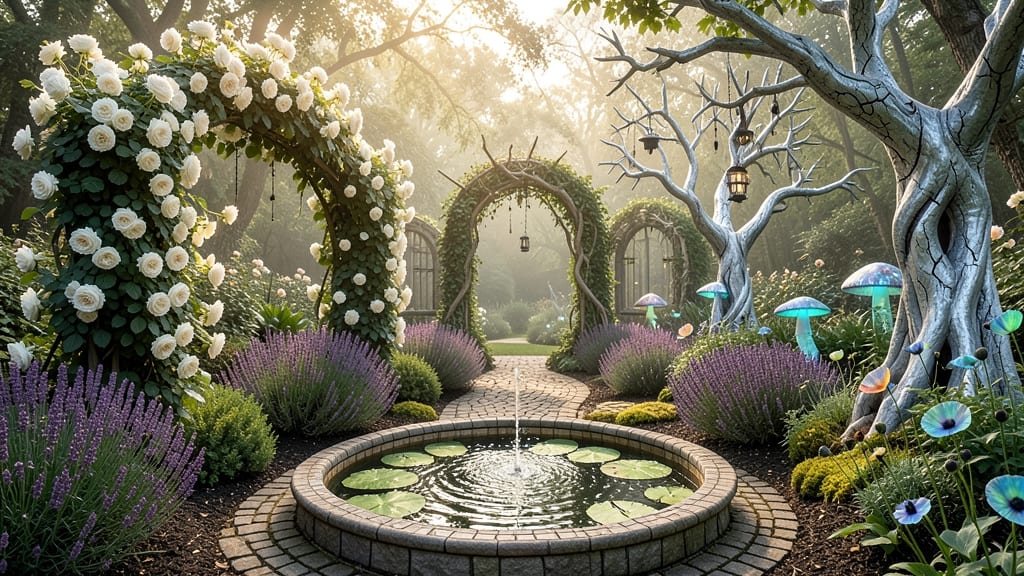
Alice in Wonderland botanical gardens transform classic story scenes into living landscapes through carefully curated plant pairings, such as forget-me-nots for the Queen's garden, delicate roses for the Mad Hatter's tea party, and towering sunflowers to evoke Wonderland's oversized charm. Each selection carries symbolic weight while creating a visually immersive experience.
These themed gardens go beyond decoration—they tell the story through botanical storytelling. 🌸 The Queen's blue forget-me-nots symbolize loyalty and memory, while the Mad Hatter's white roses represent both madness and purity in their dual nature.
Designers often incorporate red poppies for the Queen's volatile temper and giant pumpkins to mirror the oversized world Alice explores. The magic lies in how these plants create a sensory journey through the tale, blending horticulture with narrative.
What makes these gardens special is their attention to seasonal transitions. For instance, spring brings vibrant tulips for Alice's first descent, while autumn showcases deep purples and oranges that evoke the Queen's court.
The layout typically follows the story's progression, with visitors "shrinking" or "growing" as they move through different plant zones. This thoughtful arrangement turns a simple garden into an interactive experience that engages both the mind and the senses.
💡 In This Article
- Symbolic Plant Pairings in Alice’s Wonderland Garden
- Designing Your Own Alice-Inspired Garden Layout
Symbolic plant pairings in Alice’s Wonderland garden
The Queen of Hearts' garden is often depicted with blue forget-me-nots (Myosotis), a choice that carries deep symbolic weight.
These delicate flowers have been associated with loyalty and remembrance since medieval times, reflecting the Queen's obsession with order and her infamous "off with their heads!" decree—a paradoxical mix of beauty and brutality. 🌿 The plant's name itself originates from the German phrase "vergiss mein nicht," meaning "don't forget me," which contrasts with the Queen's forgetful nature about Alice's existence.
Botanically, forget-me-nots thrive in moist, well-drained soil and prefer partial shade, making them ideal for garden borders where visitors can literally "step into" the Queen's domain.
White roses (Rosa alba) dominate the Mad Hatter's tea party section, where their dual symbolism of purity and madness creates a striking visual metaphor.
The Hatter's tea party is famously nonsensical, yet the white roses evoke both the whimsy of the scene and the underlying melancholy of the Hatter's character. 🌹 Horticulturally, white roses require consistent moisture and full sun to maintain their pristine petals, while their thornless varieties (like 'Iceberg') make them safe for children to touch—a practical consideration for family-friendly gardens.
The contrast between the roses' delicate fragrance and the chaotic energy of the tea party scene creates an immersive sensory experience that mirrors the story's themes.
Red poppies (Papaver rhoeas) often appear near the Queen's court to symbolize both her fiery temper and the fleeting nature of power.
These annual flowers bloom rapidly and fade quickly, much like the Queen's shifting moods, while their vibrant red color demands attention—just as the Queen's commands demand obedience. 🌸 The poppies' self-seeding habit means they'll return year after year with minimal maintenance, making them a perfect choice for a garden that should feel both carefully curated and effortlessly wild.
Their height (typically 12-18 inches) creates natural vertical interest, drawing the eye upward toward the Queen's towering presence in the story.
Giant sunflowers (Helianthus annuus) dominate the "oversized" sections of Wonderland gardens, where their towering 6-12 foot stalks literally shrink visitors in comparison.
These plants thrive in full sun and well-drained soil, with varieties like 'Russian Giant' reaching heights that create an immediate sense of scale. 🌻 The sunflowers' bright yellow blooms also evoke the golden hour lighting in Lewis Carroll's illustrations, while their edible seeds add a playful interactive element—visitors can pick and eat them, just as Alice might.
The contrast between these massive plants and delicate forget-me-nots creates visual drama that mirrors Wonderland's shifting perspectives.
Seasonal transitions play a crucial role in maintaining the garden's narrative flow. Spring brings tulips (for Alice's first descent) in bold purples and reds, while summer showcases lavender (for the Hatter's garden) with its calming aroma and gray-green foliage.
Autumn gardens feature deep purple asters and orange marigolds to evoke the Queen's court, while winter sections often include bare branches with hanging ornaments to represent the "empty" spaces in Wonderland's logic. 🌼 This careful seasonal planning ensures the garden remains a living storybook throughout the year, with each visit revealing new botanical interpretations of the tale.
What makes these plant pairings particularly effective is how they engage multiple senses. The scent of roses and lavender creates an olfactory journey, while the texture contrast between soft forget-me-nots and spiky poppies adds tactile interest.
Even the sound of rustling sunflower leaves or the crunch of dried poppy seeds underfoot becomes part of the narrative experience. This multisensory approach is what transforms a simple garden into a fully immersive Wonderland experience that lingers long after the visit. ✨